
Subtotal ₹0.00
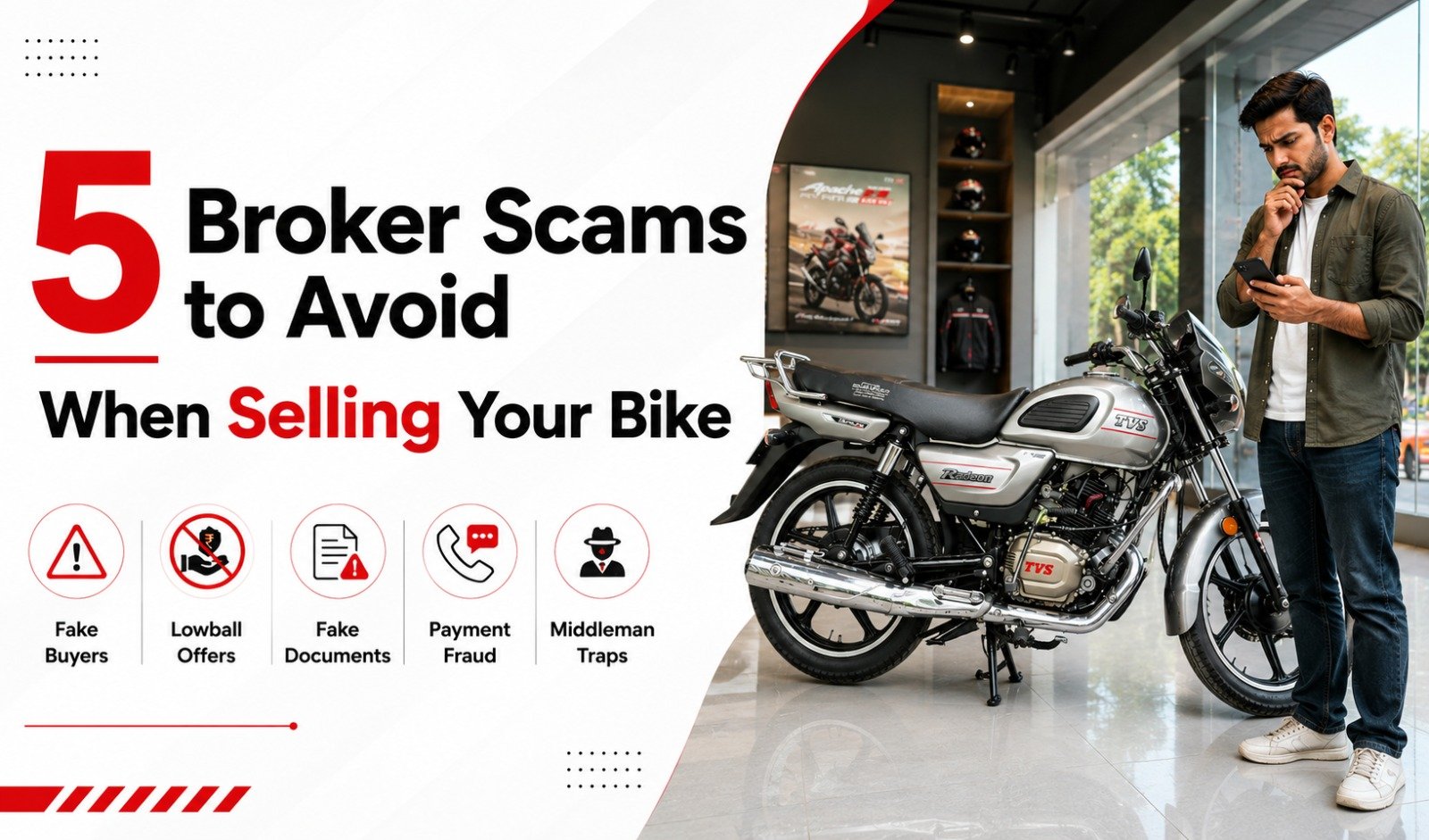
So you’ve decided to sell your old bike. Maybe you’re upgrading, maybe you just don’t ride it anymore — either way, you go looking for a “broker” or a middleman who promises to get you the “best price” without any hassle. Sounds convenient, right?
Except a lot of sellers in India end up losing thousands of rupees — or their bike’s paperwork — to brokers who know exactly which corners to cut and which sellers won’t notice until it’s too late.
We’ve seen this pattern repeat across cities: Delhi, Chandigarh, Lucknow, doesn’t matter. The tricks are almost always the same five. Here’s what to watch out for before you hand over your keys.
1. The "Token Amount, No Paperwork" Trap
This is the classic. A broker shows up, looks at the bike for two minutes, and offers you a token amount in cash — ₹2,000, ₹5,000, whatever gets you excited enough to skip the formalities. He tells you the RC transfer will “happen later” once he finds a buyer.
Here’s the problem: once that bike leaves your hands without a proper sale agreement or Form 29/30, you’re still the legal owner on paper. If that bike gets into an accident, runs a red light, or ends up in a criminal case three states away — the challan and the FIR still come to your address.
What to do instead:
Never release the bike without completing the ownership transfer, or at minimum, without a notarized sale agreement and your own copy of the buyer’s ID. No paperwork, no bike. Full stop.
2. The Lowball-Then-Vanish Act
A broker calls, sounds enthusiastic, quotes you a price that’s 20–30% above what you were expecting. You get excited, block your calendar, maybe even tell other interested buyers “sorry, already sold.”
Then he shows up, “inspects” the bike, and suddenly finds ten imaginary problems — a scratch here, “engine noise” there — and drops the price by half. Now you’re stuck. You’ve already turned away real buyers, and you’re under pressure to just take whatever he’s offering.
What to do instead:
Treat any quote given over the phone, without seeing the bike, as provisional — not final. Get at least two other opinions before you cancel other buyers. A genuine buyer’s price won’t move by 40–50% after a two-minute look.
3. Fake RC and Duplicate Key Games
Some brokers specialize in “fixing” bikes with incomplete paperwork — missing RC, lost keys, pending loan NOCs — and sell them onward without disclosing any of it to the next buyer. If your bike has any of these issues, a shady broker might offer to “handle it” for a cut, using duplicate documents or under-the-table arrangements that aren’t fully legal
This might get you a quick sale, but if the paperwork trail gets questioned later, you’re the one whose name is on record.
What to do instead:
Always sort your bike’s paperwork — RC, insurance, PUC, loan NOC — before you sell, even if it takes an extra week. A cleanpaper bike also sells for more, so this isn’t just about avoiding trouble; it’s better for your wallet too.
4. The "Inspection Fee" Scam
A newer trick: a broker or “verified buyer” contacts you online, seems genuinely interested, and asks for a small “inspection fee” or “listing verification charge” before they’ll send someone to see the bike. It’s framed as routine — everyone pays it, they say.
No legitimate marketplace or buyer needs you to pay them to look at your own bike. This is a straightforward advance-fee scam,
and once you pay, the “buyer” disappears or keeps asking for more “charges.”
What to do instead:
Never pay anyone to sell your own vehicle. If a platform or broker asks for money upfront just to connect you with a buyer, that’s your cue to walk away.
5. The Under-Invoicing Con
This one’s sneaky because it looks like it’s saving you money. The broker convinces you to show a lower sale amount on paper — say, ₹25,000 for a bike you’re actually selling at ₹45,000 — to “save on registration tax” for the buyer
Sounds like a favor, but if anything goes wrong later (a dispute, an insurance claim, a resale issue), the official value on record is the lower one. That’s the number that legally applies to you, not the cash you actually received
What to do instead:
Always sell at the actual agreed price, on paper, no exceptions. If a broker is pushing hard for under-invoicing, that’s a sign they’re more interested in their own margins than a clean transaction for you.
The Real Fix: Cut Out the Shady Middleman Altogether
Most of these scams work because there’s a broker sitting between you and the actual buyer, controlling the information both sides get. The fewer hands your deal passes through, the fewer chances there are for someone to play games with your paperwork or your price.
That’s really the whole idea behind MySecondBike — verified listings, real buyer connects, and no under-the-table “arrangements” that come back to bite you later. If you’re selling your bike in Chandigarh or nearby, it’s worth listing it somewhere your paperwork and your price both stay exactly as agreed.
Thinking of selling your bike? List it on MySecondBike today and skip the broker games entirely.


Comments are closed