
Subtotal ₹0.00
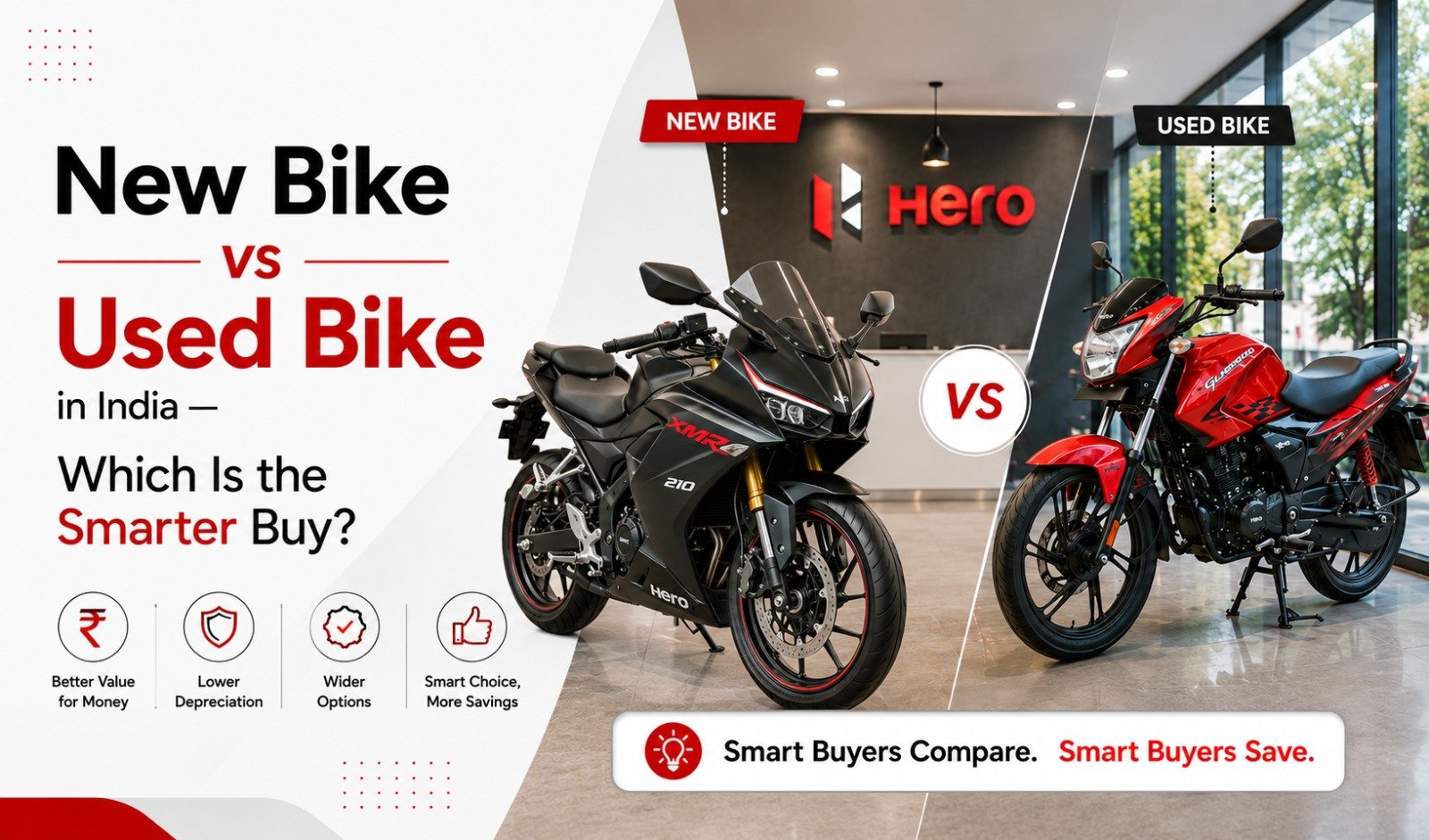
Every second bike buyer in India hits the same wall at the showroom: the on-road price on the quotation is almost double what the ad on Instagram promised. That gap between “starting price” and “on-road price” is where most people first start Googling whether a used bike makes more sense than a new one
There’s no single right answer here — a college student commuting 8 km a day and a delivery rider clocking 120 km daily need very different bikes. But the financial math, the ownership experience, and the risk factors are different enough between new and used bikes that it’s worth breaking down properly before you swipe your card or sign a loan agreement
The Real Cost Difference Between New and Used Bikes
The sticker price is the smallest part of the story. When you buy a new bike, you’re paying for:
- Ex-showroom price
- RTO registration and road tax
- Insurance (comprehensive, mandatory for new bikes)
- Handling and logistics charges
- Extended warranty add-ons the dealer will push hard
Add all of this up and a bike advertised at ₹85,000 can easily land at ₹1,00,000+ on-road. A well-maintained used version of the same model, two to three years old, is often available for 40-55% less — and that’s before you even negotiate.
The catch: you need to verify that price against the bike’s actual condition, not just its age. A 2021 bike that’s been babied in a garage can be worth more than a 2023 bike that’s been through three monsoons without a service.
Depreciation: The Silent Cost Everyone Forgets
A new two-wheeler loses roughly 15-20% of its value the moment it’s registered, and another 10% by the end of year one. By year three, most bikes have shed 40-50% of their original price
This works against you if you’re buying new, and in your favor if you’re buying used. When you buy a three-year-old bike, someone else has already absorbed the steepest part of that depreciation curve. Your resale value from that point on drops much more slowly, which means you lose less money if you decide
to sell in a year or two
If you’re someone who upgrades bikes often, this single factor alone can make used buying the financially smarter move, even before you compare purchase prices.
Loan and EMI Comparison
New bike loans are the easier route — nearly every manufacturer has tie-ups with NBFCs and banks, interest rates are competitive (often 8-11%), and tenures stretch up to 4 years.
Used bike loans exist too, but with a few differences:
- Interest rates tend to run 2-4% higher than new bike loans
- Loan tenure is usually capped shorter, often 2-3 years
- Loan-to-value ratio is lower, so expect to put down a bigger upfront amount
- Not every bank finances bikes older than 5 years
The upshot: even with a slightly costlier loan, the lower principal on a used bike usually means a lower EMI overall. Run the actual numbers with an EMI calculator before assuming either option is automatically cheaper — the interest rate difference matters more as the loan tenure gets longer.
Insurance and RC Transfer: Where Used Bikes Need Extra Care
This is the part that trips up first-time used bike buyers the most.
With a new bike, insurance is bundled in at purchase and the RC is issued directly in your name. With a used bike, you’re responsible for two things that new buyers never think about:
- Insurance transfer — the policy needs to move to your name within 14 days of the sale, or you risk
riding uninsured without realizing it - RC transfer — the registration certificate must be legally transferred at the RTO, otherwise challans,
past disputes, or even loan liens on the vehicle can come back to haunt you
Skipping either step is the single biggest reason used bike deals go wrong after the sale is done. A verified seller and a marketplace that checks documentation before listing removes most of this risk.
When Buying New Actually Makes Sense
Used isn’t automatically the smarter choice for everyone. A new bike is worth the premium when:
- You want the latest features — connected apps, ABS variants, updated engine tech
- You plan to keep the bike for 6+ years and want the full manufacturer warranty
- You’re buying your first vehicle and want zero uncertainty about its history
- Manufacturer finance schemes or exchange offers bring the effective price close to a used bike anyway
When Buying Used Is the Smarter Buy
A used bike tends to win when:
- Budget is the primary constraint and you need a reliable commuter, not a status upgrade
- You want to avoid the steepest depreciation hit in the first year of ownership
- You’re testing whether a particular model or riding style suits you, before committing to it long-term
- You’re comfortable doing (or getting help with) a proper inspection and paperwork transfer
New vs Used Bike: Quick Comparison
| Factor | New Bike | Used Bike |
|---|---|---|
| Upfront cost | Higher | 40-55% lower on average |
| Depreciation hit | Steepest in year one | Already absorbed by previous owner |
| Loan interest rate | Lower (8-11%) | Higher (10-15%) |
| Warranty | Full manufacturer warranty | Limited or none, unless transferable |
| Paperwork | Handled by dealer | Buyer must verify RC and insurance transfer |
| Best for | Long-term ownership, latest tech | Budget-conscious buyers, short-term ownership |
The Bottom Line
If your budget is tight and you need a dependable bike without the new-bike depreciation hit, a well-inspected used bike is usually the smarter financial call. If you want the latest tech, a full warranty and zero paperwork headaches, new is worth the premium.
Either way, the deciding factor isn’t new versus used — it’s whether you’ve actually verified what you’re buying. Browse verified, document-checked used bikes on MySecondBike and compare real listings before you decide.
Frequently Asked Questions
Yes, as long as you verify the RC, check for any pending loan hypothecation, confirm the engine and chassis numbers match the RC, and complete the ownership transfer at the RTO. Buying through a verified marketplace reduces most of this risk.
On average, a 2-3 year old used bike costs 40-55% less than the same model bought new, depending on condition, mileage, and how well it has been maintained.
Interest rates on used bike loans typically run 2-4% higher, and tenures are shorter. However, since the loan principal is lower, the actual EMI is often still less than financing a new bike.
The registration certificate (RC), insurance papers, pollution certificate (PUC), service history if available, and confirmation that there's no loan lien on the vehicle. RC transfer to your name is legally required after purchase
The registration certificate (RC), insurance papers, pollution certificate (PUC), service history if available, and confirmation that there's no loan lien on the vehicle. RC transfer to your name is legally required after purchase


Comments are closed