
Subtotal ₹0.00
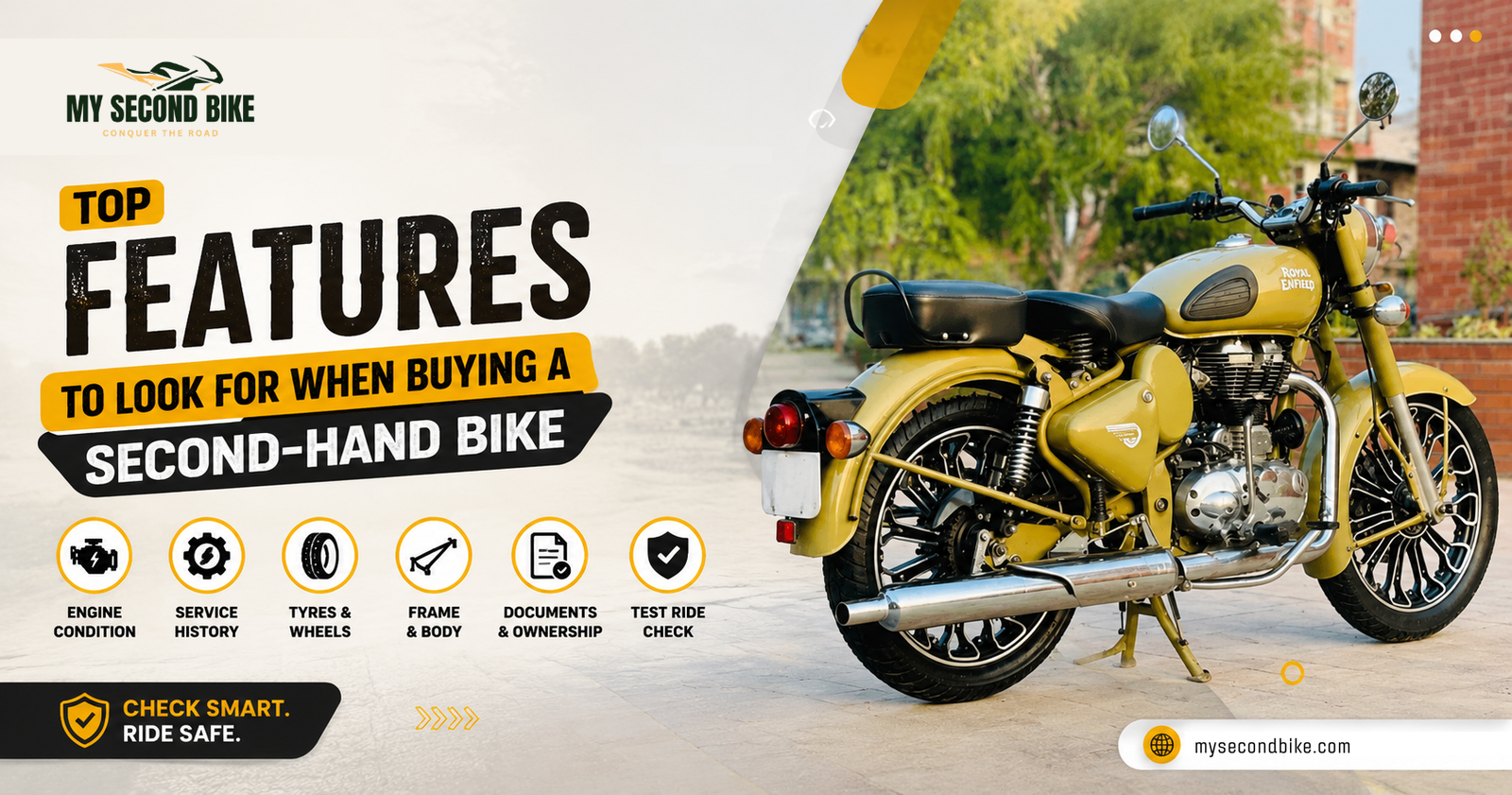
We’ve all been there — standing in front of a used bike that looks great on the outside, the seller is friendly, the price feels right, and you’re already picturing yourself riding it home. But looks can be deceiving. A little bit of patience and the right checks before you buy can save you from a very expensive mistake.
Buying a second-hand bike is one of the smartest financial decisions you can make — you get a solid machine at a fraction of the new price. But the difference between a great deal and a bad one almost always comes down to what you check before handing over the money. This guide walks you through exactly what to look for, in plain language, so you can walk into any used bike deal with confidence.
1. Start With the Engine — It Tells You Everything
Think of the engine as the heart of the bike. Everything else can be fixed or replaced affordably — bodywork, tyres, even electronics. But a damaged engine? That’s where repair bills can easily outrun what you paid for the bike itself.
The first thing to do is ask the seller not to warm up the bike before you arrive. A cold start test is the most honest one — a healthy engine fires up quickly even when cold. If it takes three or four kicks and needs the choke held for five minutes, that’s telling you something.
Once it’s running, just listen. Trust your ears. A smooth, even idle is a good sign. Knocking sounds, rattling, or a ticking that’s louder than normal often means worn piston rings or valve issues. These aren’t cheap fixes. Also check for any oil seeping around the engine casing or gaskets — even a small leak tends to get worse over time.
Finally, take a peek at the exhaust. Blue smoke means the engine is burning oil, which is a sign of internal wear. White smoke in a warm engine can point to a head gasket problem. A little puff on startup is normal — persistent smoke is not.
2. Inspect the Frame — Don't Let Fresh Paint Fool You
A coat of fresh paint can hide a world of problems. The frame is the skeleton of the bike, and if it’s been bent or repaired after an accident, no amount of cosmetic work makes it truly safe again.
Step back and look at the bike from the front and from the rear. Does it look straight? The front wheel, handlebars, and rear wheel should all line up naturally. If the bike looks like it’s sitting slightly skewed, that’s a red flag.
Get down low and run your eyes along the frame rails. Look for any sections that appear thicker than the rest — this can indicate a weld that wasn’t there originally. Check the area around the steering head (where the front forks connect to the frame) and the swing arm pivot point, as these take the most stress in a crash.
3. Read the Odometer — But Don’t Stop There
A lot of buyers fixate on the odometer number as if it’s the whole story. It isn’t. A bike that’s done 35,000 km with proper servicing at regular intervals can be in far better shape than one with 10,000 km that was never properly cared for.
What you really want is the service history. Ask for the service book or any receipts from the workshop. Bikes that were serviced at authorised centres tend to have more reliable records. If the seller can’t produce any paperwork at all, that’s worth factoring into your decision.
Also cross-check the odometer reading against the physical wear on the bike. A “low mileage” bike with a worn-out seat, cracked grips, and heavily grooved foot pegs doesn’t add up. Odometer tampering is more common than most people think — the physical condition of the bike rarely lies.
Good to know:
Average usage in India is roughly 8,000–12,000 km per year. If a 4-year-old bike shows 6,000 km on the clock, it's worth asking why the usage was so low.
4. Tyres, Brakes, and Suspension — Your Safety Trio
These three things keep you upright and alive. Don’t gloss over them because the bike looks nice otherwise.
Tyres
Check the tread depth — anything under 2mm in the centre and you’re looking at a replacement before you can safely ride. Also look at the sidewalls for cracks or bulging, especially if the bike has been sitting unused for a while. Rubber ages even without use. You can find the manufacturing date stamped on the tyre as a 4-digit DOT code — tyres older than five years should be replaced regardless of how they look.
Brakes
During the test ride, apply both brakes firmly a few times. The bike should slow down straight, without pulling to one side. Grinding or squealing sounds usually mean the brake pads are worn down to metal. On bikes with disc brakes, look at the rotor — it should be smooth, without deep grooves or heat discolouration across the surface.
Suspension
Push down hard on the front forks and let go. They should come back up smoothly, not bounce repeatedly or clunk. Check the fork legs for any oily wetness around the seals — that’s a sign of a fork seal leak, which needs fixing. Sit on the bike and bounce the rear — it should feel controlled and firm, not spongy or noisy.
5. Electrics — The Five-Minute Check That Saves Big Headaches
Electrical issues on older bikes can be a nightmare to diagnose. The good news is that a basic check takes almost no time at all.
Turn the ignition on and go through everything: headlight (both high and low beam), indicators, tail light, brake light, horn, and instrument cluster. All of it should work. A non-working horn might seem trivial, but it’s a challan risk and tells you the bike hasn’t been properly maintained.
Check the battery too. Here’s a quick test — turn on the headlight and let it run for two minutes without starting the engine. If it noticeably dims, the battery needs replacing soon.
6. Documents — Get These Right Before Anything Else
You can buy the most mechanically perfect bike in the world, but if the documents aren’t in order, you’ll face real trouble getting it transferred to your name — or worse, discover the bike has dues or legal issues attached to it.
📄 Documents to Verify Before Buying
- Registration Certificate (RC) — match the owner name, engine number, and chassis number against the actual bike
- Valid insurance — check if it's comprehensive or third-party only, and when it expires
- PUC (Pollution Under Control) certificate — must be current
- NOC from the financier — mandatory if the bike was bought on a loan that's still active
- No-dues certificate if the seller is from a different state
The most important step is physically matching the engine and chassis numbers on the bike against what’s printed on the RC. The engine number is usually stamped on the casing near the base of the engine. The chassis/VIN number is typically on the frame near the steering head. A mismatch means you walk away — that bike may be stolen. You can also verify ownership status and pending dues on the Parivahan Seva portal before making any payment.
Frequently Asked Questions
The engine and the documents — it's really a tie. A damaged engine can cost more to repair than the bike is worth, and bad paperwork can leave you unable to legally register the bike in your name. Get both right before anything else.
Look for mismatched panel gaps, paint shade differences in sunlight, welded patches on the frame, or parts that look noticeably newer than everything around them. Asking directly about accident history is completely reasonable — and watch how the seller responds.
Not automatically. A well-serviced bike with 40,000 km can be a better buy than a neglected one with 12,000 km. Service history matters more than the number on the odometer. If the owner can show you regular oil changes and maintenance records, high mileage is far less of a concern.
Yes, absolutely. If there's an active loan on the bike, you need a No Objection Certificate from the bank or NBFC before the RC can be transferred to your name. Without it, the financier still has a legal claim on the vehicle — and that's a risk you don't want to take.
For premium or high-value bikes, yes — it's worth. They can spot issues an untrained eye would miss, and the cost is nothing compared to what a hidden engine problem could set you back.
Browse Verified Second-Hand Bikes
MySecondBike lists quality pre-owned two-wheelers from verified sellers across India. Filter by brand, budget, city, and more.


Comments are closed