
Subtotal ₹0.00
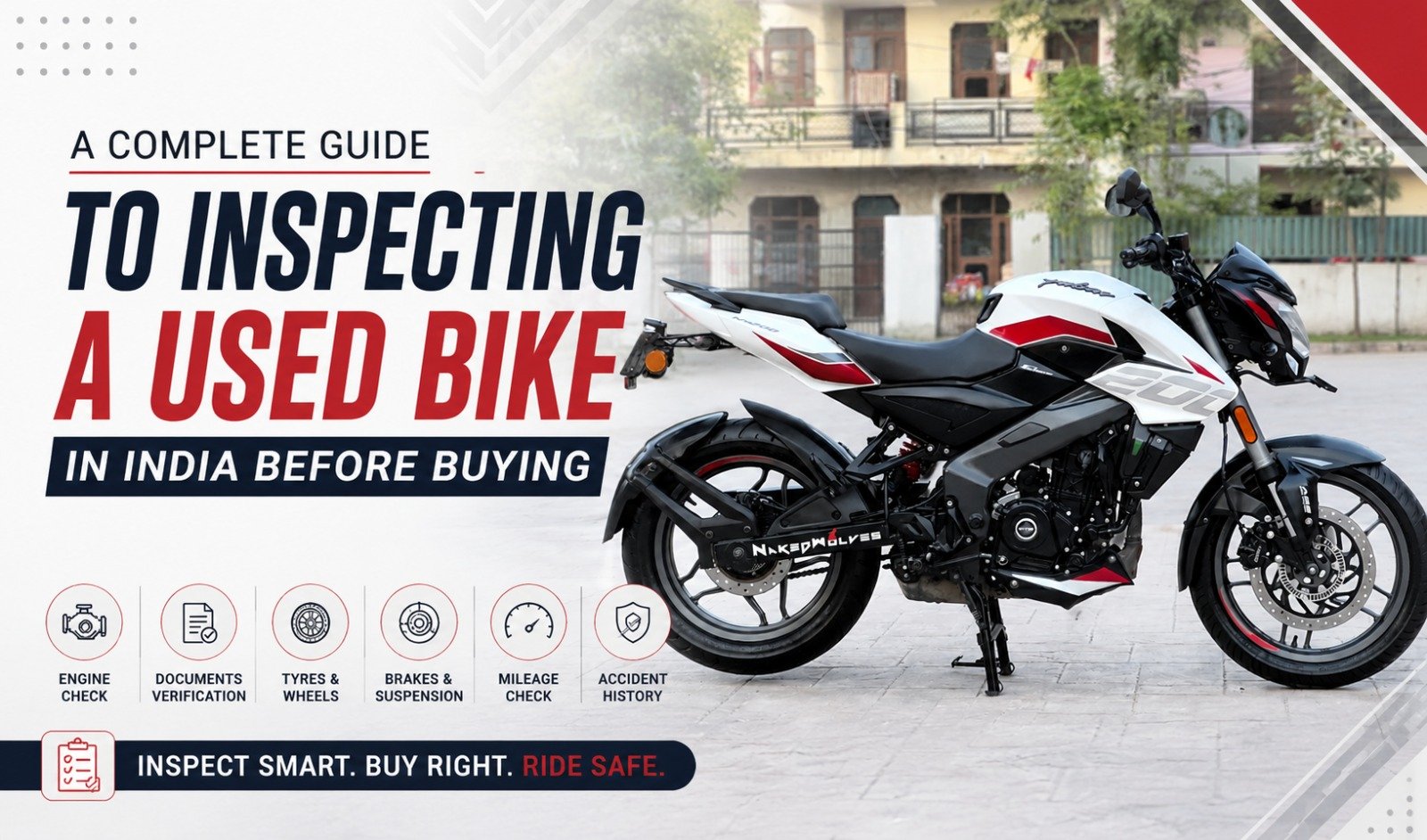
So, you’re thinking about getting a used bike in India? Smart choice! I’ve been there – standing in front of a gleaming Royal Enfield, wondering if the owner’s “excellent condition” claim actually meant something or if I’d be stuck with a money pit.
Here’s the thing: buying a second-hand bike can either be the best decision you ever made or your worst nightmare. The difference? Knowing exactly what to look for before you hand over your hard-earned cash.
I’ve learned this the hard way (yes, I once bought a bike with a “minor issue” that cost me ₹18,000 to fix). Today, I’m sharing everything I wish someone had told me back then.
Why You Can't Skip the Inspection (Trust Me on This)
Look, I get it. The seller seems nice, the bike looks shiny, and you’re already imagining weekend rides. But here’s what most people don’t realize until it’s too late:
That fresh coat of paint? Might be hiding accident damage. Those “just replaced” parts? Could mean the bike’s been in a crash. And that “barely used” claim with only 15,000 km on the odometer? Well, odometers can be rolled back easier than you think.
I’m not saying every seller is dodgy – most aren’t. But even honest sellers sometimes don’t know about problems hiding under the surface. That’s why you need to inspect every single thing yourself.
1. Start with the Paperwork (Boring but Essential)
Here’s what you absolutely need to check:
The RC Book (Registration Certificate)
First, make sure it’s the original – not a photocopy or something that looks like it was printed yesterday. Match the chassis and engine numbers with what’s actually stamped on the bike. And here’s something crucial: look for “hypothecation” anywhere on the RC. If you see it, that bike still has a loan on it. Run.
Also, check how many times the bike has changed hands. A 3-year-old bike with 5 different owners? That’s suspicious.
Insurance Papers
You need valid insurance anyway, right? But check the claim history too. If there are three or four claims, that bike has probably seen some rough times. One claim? Usually okay. Multiple claims? Walk away.
PUC Certificate
Honestly, this one’s not a deal breaker since you’ll renew it anyway. But if the seller can’t even produce a valid PUC, what else haven’t they maintained?
Service Records
This is where you separate the good owners from the careless ones. A proper service book with actual stamps from authorized centres tells you everything. No service book? They probably skipped services or went to random roadside mechanics.
Real talk: I once saw a service book where the last entry was from 2022. It was 2024. That bike had more problems than I could count.
2. Now Let’s Actually Look at the Bike
Okay, paperwork’s done. Time for the fun part – except it’s not really fun when you’re trying to spot problems. Here’s my approach:
Walk Around It Slowly
Don’t rush this. I literally walk around the bike three times, looking from different angles. You’d be amazed what you miss on the first pass.
Paint job: Does it look too fresh? Mismatched colours between panels? That’s usually accident damage they’re trying to hide. Original paint has a certain look – a bit worn in places, maybe some small chips. That’s honest wear.
Rust: Check under the fuel tank cap, around the exhaust, and on the frame. Surface rust is normal in Indian weather, but if you see rust eating through metal, that’s a problem.
Dents and scratches: Some scratches are fine – bikes fall sometimes, especially in parking lots. But deep dents on the tank or side panels? That’s impact damage.
Panel gaps: Stand back and look at the gaps between body panels. Are they even? If one side looks different from the other, panels have been replaced. Which means accident.
The Frame (This is Serious Stuff)
Run your hands along the frame. Feel for anything weird – welds, cracks, or bent sections. If someone’s welded the frame, that bike has been in a serious crash. Bent frame? Same story.
Fresh paint on just the frame while the rest of the bike looks old? Major red flag. They’re hiding something big.
Tyres and Wheels
I learned this from a mechanic who’s forgotten more about bikes than I’ll ever know:
Look at how the tyres are worn. Both edges worn equally? Good. One side more worn? Alignment is off, which could mean frame damage.
Check the tread depth with a ₹5 coin – if it disappears into the tread, you’re good. If not, you’ll need new tyres soon (budget ₹3,000-8,000 depending on the bike).
Spin both wheels and watch closely. Any wobbling means the rim is bent. That’s dangerous and expensive to fix.
3. The Mechanical Stuff (Where Things Get Real)
This is where most people get nervous because they’re not mechanics. Neither am I. But you don’t need to be – you just need to know what normal sounds like versus what “uh-oh” sounds like.
Starting the Engine
Here’s a trick: ask the seller not to start the bike before you arrive. A cold engine tells you way more truth than a warmed-up one.
When you start it:
Should fire up in 2-3 kicks max (or instantly with electric start)
If it takes forever, something’s wrong – could be the battery, carburettor, or worse
One time I saw a guy trying to sell his Splendor. Took him 15 kicks to start it. He blamed the “cold weather.” It was April. In Mumbai. Yeah, I passed on that one.
Listen to the Engine
Once it’s running, just stand there and listen for a minute. Close your eyes if it helps.
Normal sounds: Smooth purring or gentle rumble (depending on the bike)
Bad sounds:
Knocking (like someone tapping metal) = internal engine problems = expensive
Rattling = something’s loose or the timing chain is worn
Ticking = valves need adjustment (not too bad, costs ₹500-1,000)
The Smoke Test
Rev the engine a bit and watch the exhaust:
No smoke or just a tiny bit when cold? Perfect.
Blue smoke? Engine’s burning oil. Rings or valve seals are worn. You’re looking at ₹10,000+ to fix.
Black smoke? Running rich. Usually a carburettor issue, cheaper to fix but still annoying.
White smoke (thick stuff)? Coolant’s leaking into the engine. This is really bad. Don’t buy this bike.
Clutch and Gears
Pull in the clutch and shift through all gears while standing still. Should be smooth, no grinding.
Then during your test ride, the gears should slot in cleanly. If you’re fighting with the gearbox or it pops out of gear on its own, there’s transmission damage.
Brakes (Because You Like Being Alive)
Squeeze the front brake lever and push down on the rear. They should feel firm, not spongy.
Check the brake fluid – it should be clear or slightly yellow, not dark brown. Dark means it hasn’t been changed in forever.
Suspension Check
Push down hard on the handlebars. The forks should compress and come back up smoothly – once. If they bounce multiple times, the dampers are shot.
Do the same on the rear. Look for oil leaking from the front forks – if you see it, that’s a ₹4,000-6,000 repair.
4. Test All the Electrical Bits
This part’s easy but people skip it. Don’t.
Turn on the ignition and test everything:
Headlight (both high and low beam)
Indicators (all four)
Brake lights (both front and rear brake)
Horn
Speedometer and fuel gauge
All the switches on the handlebar
I once bought a bike where the right indicator didn’t work. “Easy fix,” I thought. Turned out the entire wiring harness was fried. Cost me ₹7,000. Test everything.
5. The Test Ride (Finally!)
Never, and I mean NEVER, buy a bike without riding it. I don’t care if the seller’s your cousin’s friend. Ride it.
Start Slow
First, just ride around the neighbourhood. See how it handles at low speeds:
Does it go straight or pull to one side?
Can you maneuver it easily in tight spaces?
Does the handlebar feel aligned?
Then Open It Up
Find a clear stretch and really ride it:
Accelerate through all the gears
Hit the brakes hard (safely, obviously)
Listen for new sounds that weren’t there when idling
Feel for vibrations at different speeds
If something feels off, it probably is. Trust your gut.
After the Ride
This is important – check the bike again while it’s still hot:
Any oil leaking from the engine?
Coolant dripping? (if it’s liquid-cooled)
Weird burning smells?
Is the exhaust glowing red? (it shouldn’t be)
6. The Odometer Reading (Are Those Real Kilometres?)
Let me tell you something – odometer tampering is SO common in India. I’ve seen bikes with 12,000 km on the odo that looked like they’d done 50,000.
Here’s how to spot fakes:
Look at wear patterns:
Handlebar grips worn out but shows 15,000 km? Suspicious.
Seat looks like it’s been sat on for 5 years but odo shows 20,000 km? Nope.
Foot pegs worn smooth? That doesn’t happen at 18,000 km.
Check service records:
If they have them (and they should), look at what mileage was recorded at each service. Does it match?
General rule: A bike in India does about 5,000-8,000 km per year on average. A 4-year-old bike with 12,000 km? Either barely used (rare) or odometer’s been rolled back (common).
7. Red Flags That Scream “RUN AWAY”
I’ve seen some stuff, man. Here’s when you should just walk away:
Seller won’t show original RC book (only has a copy)
“My friend’s selling it, I don’t know much about it” (classic scam line)
Frame has welding marks
Numbers on engine/chassis don’t match the RC
“My mechanic friend just checked everything” but no service records
They want you to decide RIGHT NOW
Price is ₹30,000 below market value (if it’s too good to be true…)
They meet you in some random location, not at their home
8. Negotiating Like a Pro
Found some issues? Good – that’s your leverage.
Here’s what I do:
Make a list of everything that needs fixing
Look up actual repair costs (don’t guess)
Add it all up
Knock that off the asking price, plus another 5-10% for negotiation buffer
Example: Bike’s listed at ₹45,000. You found:
Chain and sprockets need replacing: ₹5,000
Front brake pads worn: ₹800
Battery dying: ₹2,000
Minor scratches: ₹1,000
That’s ₹8,800 in repairs. Offer ₹35,000-36,000 and settle somewhere around ₹37,000-38,000.
Don’t be afraid to negotiate. The worst they can say is no.
My Final Two Cents
Look, buying a used bike doesn’t have to be scary. But it does require patience and a bit of homework.
I’ve bought four used bikes over the years. Two were great deals, one was okay, and one… well, let’s just say I learned a lot from that mistake.
The bikes that worked out? I spent 2-3 hours inspecting them properly. The one that didn’t? I rushed because I was excited and the seller seemed trustworthy.
If you’re not confident about any of this, bring a mechanic friend or hire one from a local shop (usually costs ₹500-800). Worth every rupee for peace of mind.
And hey, if you want to skip the headache altogether, check out MySecondBike.com. They verify everything before listing, so you’re not buying blind. I’m not saying they’re perfect, but at least you’ve got some protection.
Whatever you decide, be patient. The right bike will come along. Don’t settle for something dodgy just because you’re tired of looking.
Ride safe, and welcome to the used bike club. It’s actually pretty great when you get it right!


Comments are closed